



Should we be worried about hemp-derived THC beverages? After all, as part of ending the recent federal government shutdown, Congress moved to close the loophole in the 2018 Farm Bill that technically permitted manufacture of these popular products. While that closure isn’t set to take effect until November 13th, 2026, the cannabis drinks industry faces an uncertain future given this potentially devastating outcome.

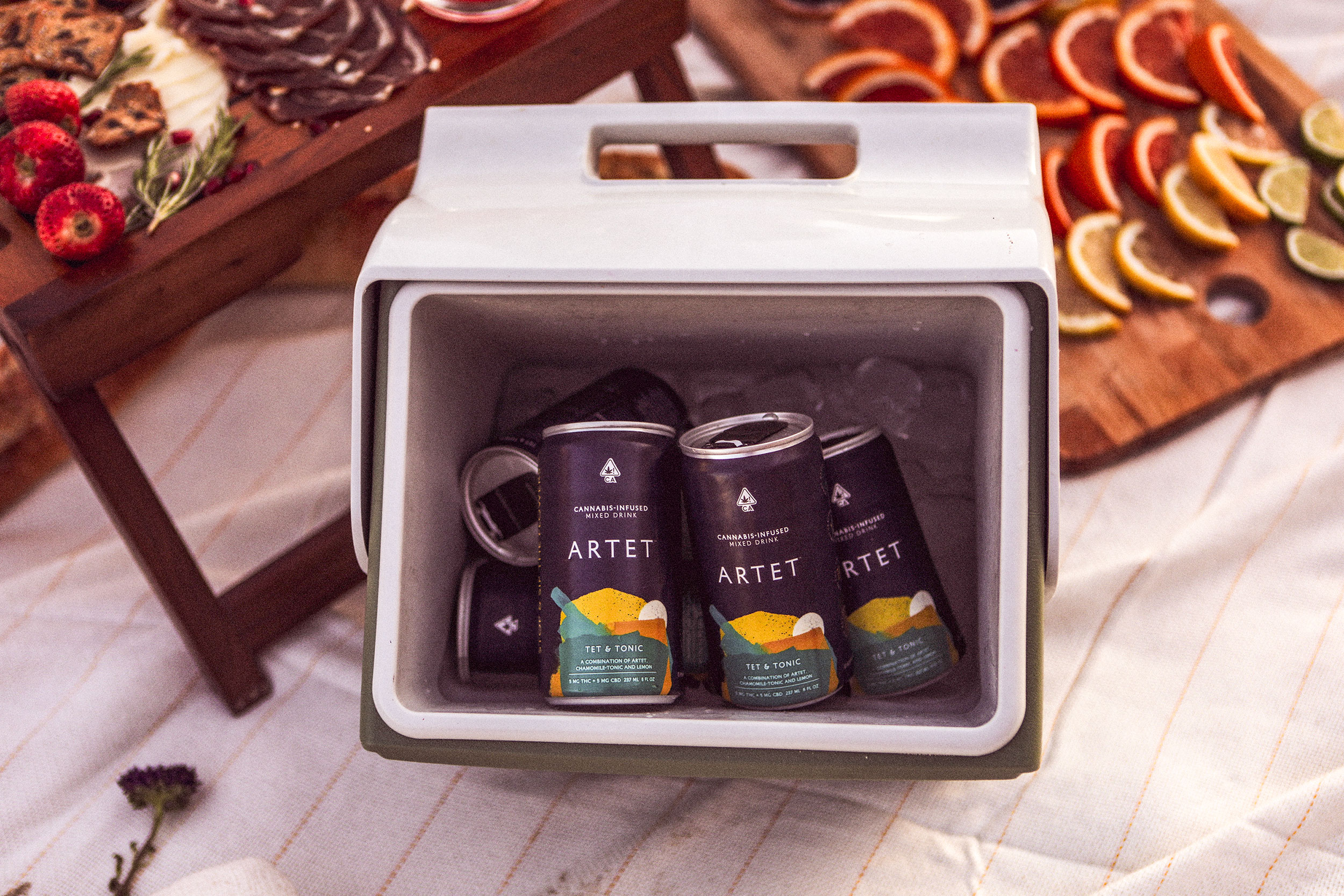
To better understand what is at stake, Editors Kyle Swartz and Krystina Skibo recently sat down with Xander Shepherd, co-founder of the THC beverage brand Artet. Shepherd joined us for an episode of On & Off, our podcast that discusses the on- and off-premise beverage alcohol industry. What follows is a partial transcript of that conversation.
Kyle Swartz: Can you tell us a little bit about what these changes are, and how you think they’ll affect the industry?
Xander Shepherd: I think the Devil’s in the details. And certainly on the face, you can look at what has transpired and refer to it effectively as a ban. I think if we’re being fair, which is probably more generous than many would was necessary, but if we’re being fair to the language that was put into amending the federal funding bill, where this language kind of got snuck in, it limits the potency of a product at 0.4 mg of THC. Which is if we want to, again, be sort of mindful here, is a number larger than zero. So in effect, there is some amount of THC permitted in finished products.
Now, that is being extremely generous and extremely flexible in this sort of thinking. The reality is that at 0.4 mg, it is effectively so low that no one would theoretically feel anything, which does challenge many of the products, many of the brands, many of the experiences, many of the sort of end benefits that people seek in consumption of THC goods.
So yes, in many ways there is a legitimate reckoning happening in terms of the viability of this category and these products. Not because people don’t want them, not because consumers aren’t demanding them, but because there are questions around who gets to participate in this category, in this industry, who gets to thrive and benefit on the commerce side of this category and industry. And again, I think to be very direct and upfront about it, how to do so safely, consistently and on an even playing field from a regulatory standpoint.
So, if we do nothing as an industry on November 13th, 2026, this will effectively all go away. But I can tell you, I’ve been on calls, wall to wall, for the last better part of eight or nine days since this all transpired.
We’ve also been on calls. We’ve been in trade group conversations. We’ve been on interviews. And when I say ‘we’, I mean the category, and specifically the beverage part of this category. We have been talking and screaming and shouting about regulation well before this language got put into place. And I think that is one of the things that I also try to stress in this.
There are so many people in this industry who want to treat consumers with respect and with safety in mind, and are asking to be regulated, just simply not prohibited.
KS: Some of the legislators now deciding what’s next for this industry have suggested that THC drinks should be sold at dispensaries instead of liquor stores. What are your thoughts on that?
XS: We were selling [Artet] in dispensaries in California, and people liked the product. People liked it when they discovered that it was something they could ask for. This was very novel at the time in certain ways, particularly for us, a beverage that is a low-potency, high volume of liquid.
And I bring this up to say that we never felt like we had a product market fit or a product consumer fit challenge. We knew we had something that resonated with people, but what we struggled with was the channel we existed within. And my pie-in-the-sky idea has always been around, whether it’s THC from cannabis or THC from hemp, that regulations and frameworks will exist such that specialists in categories can actively handle this ingredient. So what does that mean? Obviously, beverage is an easy one, right? Where you see the Total Wines and places of the world who already do 21-plus carding when they sell products to people, doing the same thing for the liquid format of this product. Same with on-premise for bars and restaurants.
Dispensaries can sell flower, can sell vapes to people. There’s no retail experience quite like a dispensary, where you ask somebody on the side of the retailer to be an expert on things. You eat, drink, smoke, inhale, give it to your dog so it doesn’t bark when the doorbell rings, you know, you it rub on your joints if you’re recovering from an injury, and so forth. So it’s sort of, at the moment, a very naive way of thinking about commerce around this category, around this plant, and around this substance, to say that everything needs to go through a dispensary.
Now, a lot of people may not agree with me. But I do think that the easiest way to do this is have people who are already regulating and controlling active ingredients treat it similarly. Maybe amend some of the thinking and logic around it for whatever nuances equate to compare to alcohol. But this exists. The capabilities to do this exist. You know, even in the world of alcohol, there are bans of what ABV can be for wine or for whiskey, and how it’s all taxed.
There was a world in which people were drinking moonshine and then they said, ‘Okay, well, actually, you know, we need to rein that in.’ So there are so many parallels that have existed in history that tell me, and tell the people in our category who are trying to do this, that this is not an impossible ask, or an impossible feat.
It’s just, I think, education, coordination and a willingness to maybe on the margins make some sacrifices in what can be done in pursuit of what is allowed to exist and thrive as a long-term future market.
Krystina Skibo: Absolutely. Everything that you just said, I’ve been hearing from people, not just in the cannabis industry, but also in the beverage alcohol industry. It’s kind of a no-brainer how the alcohol industry has been handling it. I mean, it just makes sense to follow those same regulations and make it work for everybody. So given these changes that can really disrupt the cannabis industry, how is Artet preparing themselves to go along with the changes? And what advice do you have other brands to do the same?
XS: First thing first, THC from hemp and THC from cannabis, while they are the same exact naturally found compound, hemp has a legal federal framework for how it can exist, and cannabis has the state-by-state states’ right to legal cannabis markets. So in many ways, the cannabis industry will be unaffected by this. They may look at this actually as a boon to their business, because many in these sort of regulated cannabis worlds have actually been very critical of hemp, because they feel like it’s an unfair advantage. [Because it has federal framework, as compared to state by state.]
Now, the disappointment as far as I’m concerned, is that we have existing frameworks for our products in California. Right? That’s where we started in 2018 or 2019. And we have a whole host of dispensaries that sell Artet in Illinois, because we’ve had a really great partner out there. Outside of those two markets, if any and all of this goes into effect, the majority of the United States will lose access to Artet. The majority of the United States will lose access to other brands like Artet, because most of the states that also that have these hemp industries, do not have legal cannabis markets. So if anything, the impact here is that there’s going to just be a massive shock to supply. And very few will be able to continue to get access to these things.
We have a lot of examples in history of what happens when Prohibition or Prohibition-style policies exist. People don’t stop seeking things out. They unfortunately seek out worser or lesser-quality, less safe alternatives. So to me, those are the impacts that I’m more concerned about and worried about. Because, you know, sure, our business would contract pretty majorly overnight, but we would still have at least two markets where we can sell stuff and try to figure it out. It’s more about all the people who don’t have those things. Where risk of going to jail, where risk of losing your job, or whatever might be come into play, because of how people perceive cannabis versus hemp.
This interview was edited and condensed for publication. For the full podcast interview, visit bevinfogroup.com/insider.