
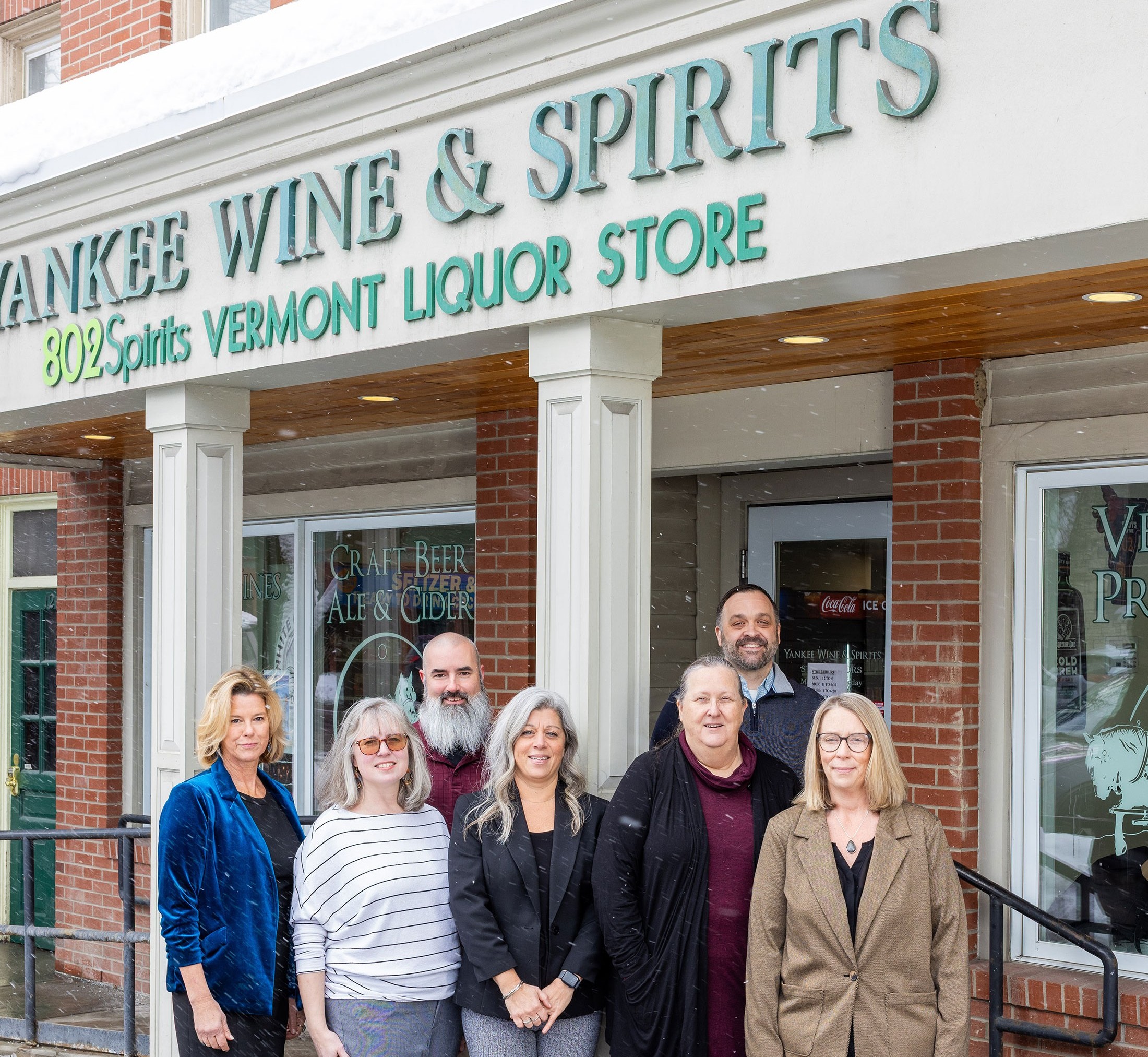
Wendy Knight, Commissioner of the Vermont Department of Liquor and Lottery, has an extensive background in business, hospitality and tourism.
Prior to her current position, she served as Vermont’s Commissioner of the Department of Tourism and Marketing, and vice chair of the Vermont Outdoor Recreation Economic Collaborative. She was also part of the senior leadership team at the Agency of Commerce and Community Development and a strategic lead for ThinkVermont, a state economic development initiative.

Her background also includes running a craft beer store in the Adirondacks, and writing more than 100 articles for The New York Times, largely on travel and leisure. She also spent time working for her family business.
Valuing all this relevant experience, Vermont Governor Phil Scott appointed Knight to the Department of Liquor and Lottery in 2021.
“It’s the best job I ever had,” says Knight, of running the dual department with 80 employees. “We have an amazing department, and the governor is an amazing individual to work with as well.”
“Being a retailer in the past gave me real insight into that world,” she added. “Retail is a difficult space. I have the utmost respect and empathy for the retailers.”
On the alcohol side, her agency is tasked with purchasing, distributing, and selling distilled spirits, including through the state’s 802Spirits stores. Knight took on that responsibility with the governor’s goals in mind.
“He’s focused on growing our economy, making Vermont more affordable and protecting the most vulnerable,” she says. “Each agency creates our own goals that lead up to the governor’s goals.”
For her and her staff, that was a three-fold objective. First, Knight wanted to fully integrate the two departments, liquor and lottery.
“In 2018, legislation passed that took two smaller departments, liquor and lottery, and combined them,” she explains. “But really, there was no meaningful integration. As soon as I became commissioner, I began work on that integration.”
The second objective was the legalization of online sports betting in the state. Knight achieved this goal in 2024 when Vermont passed a law to allow the practice. This comes as online sports wagering continues to grow in popularity across the country, with advertisements increasingly ubiquitous, especially during sports games.
Lastly, Knight came into the commissioner position looking to forge a clearer path forward for a new liquor warehouse.
“Our current warehouse is more than 50 years old,” she says. “It’s 330,000 square feet; it’s tiny. It doesn’t allow us to grow.”
“A larger warehouse will allow us to buy more products at less cost, thus improving our margins,” she adds. “And we will have more inventory, and reduce breakage, with more room and fewer people bumping into one another. All that means that we will be able to invest more in the growth of our fund, which continues to fund the general fund.”
Work remains on that last objective, with Knight saying she continues to see progress towards the new warehouse goal.
Business Focused
The commissioner’s background includes leadership roles at various private businesses, including her family’s. Accordingly, she has brought common-sense business practices to the Vermont Department of Liquor and Lottery.
This has helped improve and streamline the ways that licensees operate within the regulated system.
“One of my goals was to make the department less bureaucratic and more responsive to the business needs of the licensees,” Knight say. “We want to be good regulators and also good business partners.”
For instance, Knight recalls visiting an 802Spirits store in her hometown. While in line to buy a bottle, she recognized the manager of a local restaurant in line with her. However, this licensee was waiting at the register for a different reason than Knight; the licensee was not there to buy alcohol to take home for themself. Rather, this was how on-premise accounts would have to purchase products for their own bars: directly from retail stores, like any other random customer. An inefficient system, time-consuming to say the least.
“That didn’t make sense to me,” Knight says. “So I set about to make a number of changes. In order to help grow Vermont’s economy, our role in helping businesses with liquor licenses is to make it easier and quicker for them to purchase what they need.”
“A lot of those establishments are the anchors of their downtowns,” she continues. “They’re theaters, restaurants, ski resorts, summer resorts. Wearing the hat again of zoning and development, I wanted to be a good business partner with them. I wanted to do a good job of supporting our businesses.”
Knight oversaw the creation and launch of an online ordering platform for the liquor agency.
“It’s no longer paper and check,” she says of the state’s modernized system. “It was game-changing. We sped up the pace of license ordering from 90 days down to less than two weeks. And it also improves access and transparency.”
With an eye towards fixing the problem she saw in that 802Spirits store, where the licensee was forced to wait in line, Knight changed the way that on-premise accounts ordered liquor. Working with the B2B technology provider Provi, the Vermont Department of Liquor and Lottery developed and implemented 802Spirits Connect, an online ordering platform for the state’s bars and resorts.
Launched in November of last year, 802Spirits Connect allows on-premises licensees to browse real-time inventory, build and save order lists and place orders online at their convenience. This has reduced paperwork, improved accuracy and helped businesses better manage their inventory and cash flow.
“Like Amazon, there’s a ‘repeat order’ function,” Knight said. “It’s much more efficient way for on-premise licensees to order from us.”
Additionally, Knight created a newsletter from the agency to keep licensees up to date on the latest pertinent information. She also added a position within the department specifically for helping on-premise licensees. Seeing a problem at hand, Knight designed and implemented several common-sense solutions that have paid dividends for all parties involved.
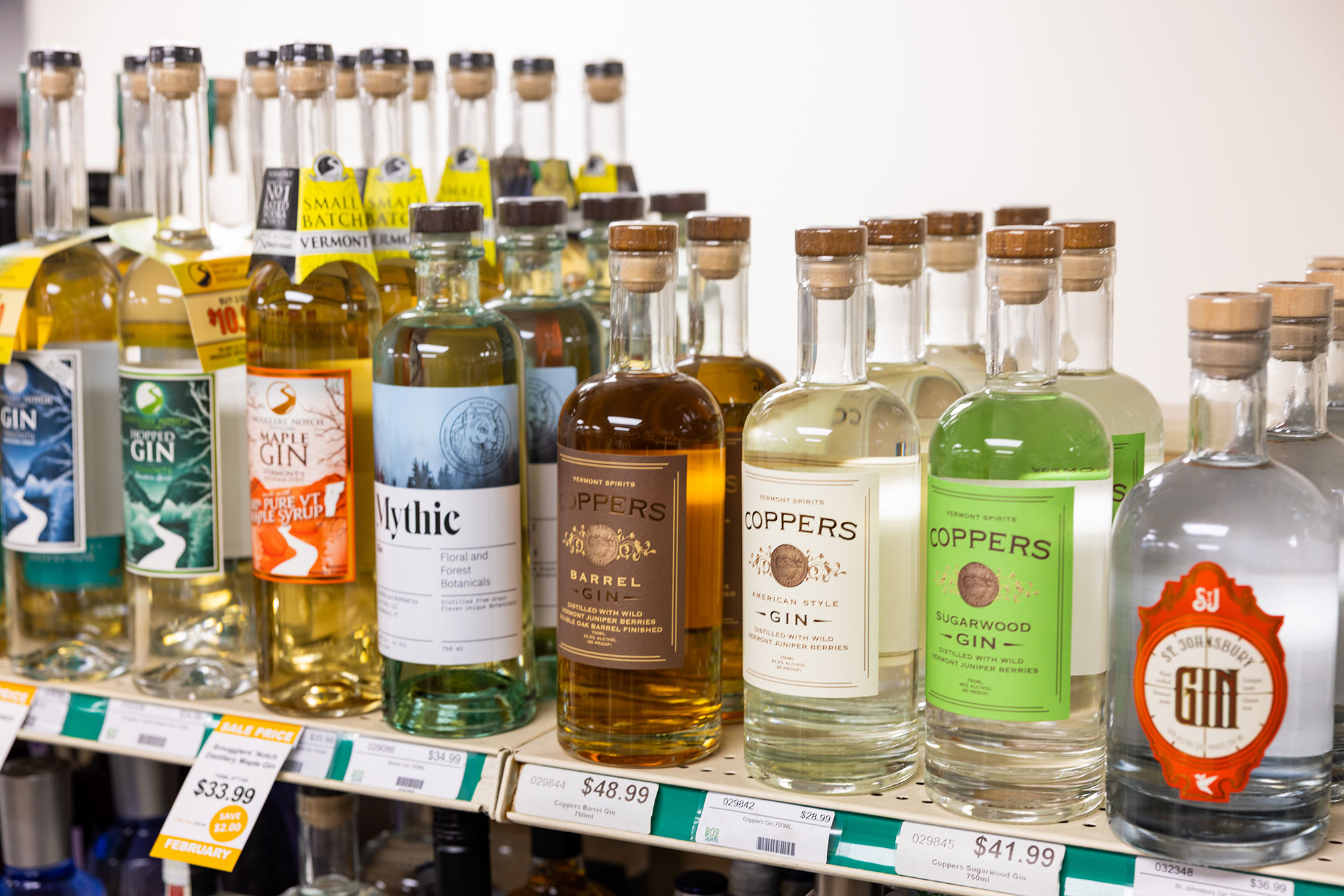
Along with this pro-business overhaul, Knight made it easier for Vermont’s spirits producers to list with the state. “And I made sure we were highlighting these local craft distillers,” she says. “We came up with ways to introduce their products more visibly within our 802 stores. We expanded the ways that Vermont producers could sell to customers, especially to tourists.”
Knight’s team made retail and network tools that tracked sales, demographics and consumer traffic patterns. One way this real-time data recently came in handy was after a series of damaging floods swept through the state. “Our analysis helped us understand the gaps in our coverage,” Knight says. “Some of our locations were better than others. So when we think about where to put an 802 store, we make sure it’s not in a floodplain, and is near where tourists like to visit.”
Vermont is a popular destination for tourists in the Northeast, known for numerous ski and summer resorts, plus several of the most-famous breweries in New England. Knight and her staff have tapped into this revenue opportunity through streamlining operations while promoting local Vermont producers and retailers.
Personal Level
Part of Knight’s business focus at the Vermont Department of Liquor and Lottery includes recognizing the value of all the people involved.
“Employee engagement is extremely important to me,” she says. “That’s one of the lessons I learned running a retail business: You’re making a mistake if you’re not paying attention to your employees.”
“I have spent a great deal of time listening to my employees,” she adds. “I want to make sure that they have the tools, resources and compensation that they need.”
This level of personal attention also extends to customers.
“In 2023 we launched our first-ever customer satisfaction survey,” Knight says. “We focused on 64 customer groups, and received great feedback. We’ve been using that to make decisions internally.”
Current Trends
By all indications, the alcohol industry is amidst a major moment of transition. Alcohol consumption has cratered among younger generations, Gen Z especially, while even older LDA consumers have cut back. However, this does not have to mean merely doom and gloom.
“Consumers are more intentional about their alcohol consumption now,” Knight says. “They’re looking for experiences, premium products, craft and small batch.”
“There’s a focus now on quality and uniqueness,” she adds.
She sees customers swapping alcohol for alternative categories.
“People are enjoying nonalcoholic, and cannabis products,” she says. “That’s just a consumer change. It just means that people are consuming less alcohol sometimes.”
Knight takes this fact in stride from her governmental perspective.
“We have to acknowledge the reality that consumption and spending habits have changed,” she said. As a regulatory government agency, “We are not in the business of promoting consumption. I have made it clear to our governor to expect less revenue from our department if people are consuming less alcohol.”
This is a realistic perspective from a government operation. “Our job is to maximize profits for the state in a responsible way,” Knight says.
That said, she has addressed the alcohol sales slowdown with her common-sense business approach. This includes 20% flash sales to help move product off the floor and into customers’ carts. “That promotion has proven successful,” she says.
As has marketing that encourages shoppers to support Vermont products and businesses. “We let people know that when you’re buying local, you’re benefitting that small family business,” Knight says.
She and her team have utilized social media to highlight local businesses, owners, mixologists and licensees. In an era where consumers are more mindful than ever about what they drink and purchase, tying in local support is a savvy way to encourage additional ringouts at the register.
On the expense side, as revenue retreats, Knight’s department has reacted by becoming even more efficient. Once again, this reflects common-sense business strategy within a government agency.
“We’re always cost conscious,” she says. “We’re always thinking, ‘How can we spend less money. If we can’t have as much control on the revenue side, then we need to control our expenses.”
What’s Next
Knight remains focused on her goal of a new liquor warehouse and combined office space. “We’re still working on it,” she says. “We’re making progress. It’s a challenge. Running a business within the structure of a state government, nothing happens as quickly as you want it to.”
The new warehouse and merged office space would “help us maximize profit for the general fund,” she adds, “while increasing efficiencies, since we would all be under one roof.”
In the current setup, Knight regrets that the office and warehouse staff do not interact as much as she would prefer. “There would be more collaborations under one roof,” she explains. “There would be more teamwork. People would feel more connected and seen. We don’t see the warehouse people. It’s really important for people to be in one place at work.”
Overseeing an organization that’s more than just alcohol requires diverse responsibilities at the Vermont Department of Liquor and Lottery.
“It’s definitely challenging when it’s three distinct industries that you’re following,” Knight says. “You have to pay attention to the evolution of each industry, what are the practices and important players.”
Which makes the achievements of the commissioner and her team all the more impressive.
“We’re just 80 employees here overseeing all three departments,” Knight explains. “And we’re generating $280 million in revenue.”
“We’re very lean, and all working hard,” she adds. “That’s why efficiencies and modernization are so important for us.”
Kyle Swartz is editor of StateWays. Reach him at kswartz@epgacceleration.com. Read his recent piece, How to Sell Allocated Whiskeys.